


Cold Plasma vs High-Frequency Facial Machines: Key Differences Explained
Both technologies rely on electrical energy, yet they differ in device design, plasma delivery, operating controls and the evidence behind their potential applications. Here is what aesthetic clinics and beauty professionals should know before comparing equipment.
Quick Answer: Are Cold Plasma and High-Frequency Facials the Same?
No—not as equipment categories. A traditional high-frequency facial wand typically uses a gas-filled glass electrode to produce a localized electrical discharge near the skin. A professional cold atmospheric plasma (CAP) system is engineered around a particular non-thermal plasma source and controlled delivery conditions. However, some high-frequency devices also create plasma discharges, so the two labels are not mutually exclusive scientific categories.
What matters most is the actual discharge design, operating instructions, verified output and intended use—not a marketing claim that one machine simply operates at a “higher frequency.”
Engineered plasma delivery
CAP equipment is built to deliver a non-equilibrium plasma discharge under defined device-specific conditions. Depending on its design, it may use ambient air or a supplied gas and may offer interchangeable treatment electrodes.
Glass-electrode facial wand
Often called a Darsonval or high-frequency wand, this equipment generally uses a high-voltage, low-current discharge associated with a sealed glass electrode, often filled with neon or argon.
1. How Does Each Technology Work?
What is cold atmospheric plasma?
Cold atmospheric plasma is a partially ionized gas in which energetic electrons coexist with comparatively cooler bulk gas. Depending on the source, the discharge can produce reactive oxygen and nitrogen species (RONS), charged particles, electric fields and small amounts of radiation. Researchers study how these components interact with microbes and biological surfaces.
“Cold” does not mean that every part of the device stays at room temperature or that all exposures are automatically safe. Output composition, temperature, exposure time, distance and electrode geometry all depend on the machine. Clinical findings for one plasma system cannot be assumed to apply to a different cosmetic device.
What is a high-frequency facial machine?
A conventional high-frequency facial wand applies a high-frequency electrical signal through a shaped glass electrode. Depending on the electrode and use technique, a visible glow or localized discharge may appear. Some devices create an ozone-like odor from air reactions; ozone production is not evidence of proven clinical benefit.
Because a high-frequency discharge can itself generate plasma, the fundamental distinction is not “plasma versus electricity.” The useful comparison is between the engineering, treatment interface, available controls and device-specific safety and performance evidence.
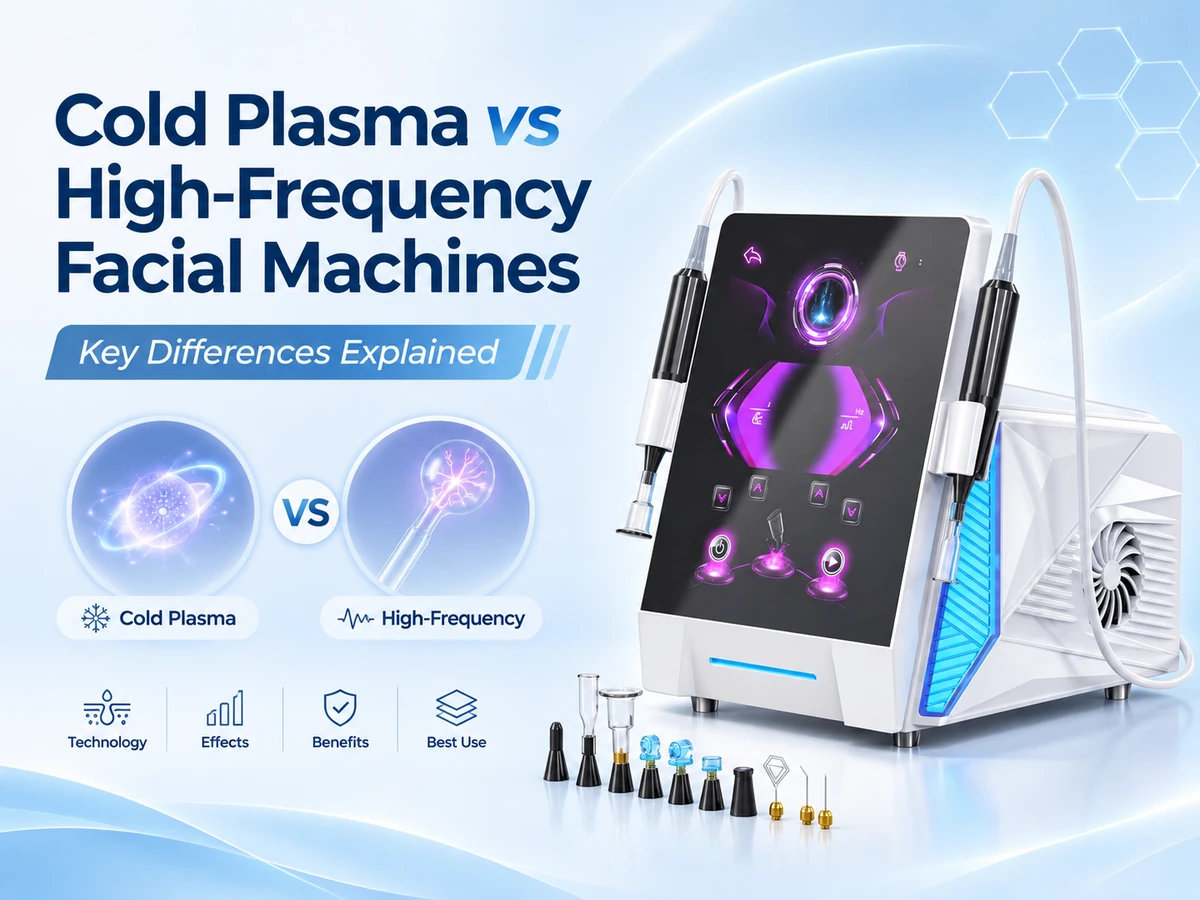
2. Cold Plasma vs High-Frequency Facial: Side-by-Side Comparison
| Feature | Professional Cold Plasma Machine | Traditional High-Frequency Facial Wand |
|---|---|---|
| Core design | Purpose-designed non-thermal plasma source; implementation varies | High-frequency electrical generator with shaped glass electrodes |
| Discharge interface | May use air plasma, a plasma jet or other device-specific electrode design | Usually a localized discharge associated with a gas-filled glass electrode |
| Gas requirements | Air-operated or external-gas configurations are possible; confirm the exact model | Gas is commonly sealed inside a glass electrode; typically no separate cylinder |
| Operator controls | Varies by system; may include intensity, modes and interchangeable electrodes | Often a simpler intensity dial and interchangeable glass electrode shapes |
| Typical market | Professional aesthetic and research or medical settings, depending on regulatory status | Traditional salon facial services and beauty equipment |
| Scientific evidence | Growing CAP literature, but outcomes are indication- and device-specific | Device-level clinical evidence for broad cosmetic claims is often limited |
| Safety checks | Output, exposure, byproducts, contraindications and intended use | Electrical safety, electrode condition, discharge proximity and byproducts |
This table describes typical product categories, not every machine on the market. Similar-looking devices may have substantially different specifications.
3. Which Applications Are Relevant to Aesthetic Clinics?
High-frequency facial workflows
- Traditional salon facial routines
- Localized electrode-based skin-care services
- Compact equipment and familiar operator techniques
Results such as acne improvement or bacterial reduction should not be promised without evidence for the specific device and intended use.
Professional cold plasma workflows
- Non-invasive cosmetic facial-care services
- Targeted T-zone or cheek-care protocols where indicated
- Additional electrode formats for selected areas, including scalp-oriented routines on compatible models
Medical applications reported in published CAP research are not automatically authorized claims for a cosmetic machine.
For skin concerns such as active acne, infections, open wounds or inflammatory disorders, clinicians should differentiate between a regulated medical treatment and a cosmetic service. A beauty device should not be represented as diagnosing, curing or treating disease unless the exact product is appropriately authorized for that purpose.
4. Safety, Training and Operating Conditions
Neither technology should be judged safe solely because it is described as non-invasive or non-thermal. Electrical discharge equipment requires proper screening, functioning electrodes, manufacturer-approved distances and exposure times, appropriate ventilation and trained use.
- Screen clients: check the exact manual for implanted electronic devices, pregnancy-related restrictions, compromised skin and other contraindications.
- Control exposure: follow the model-specific instructions for distance, intensity, duration and electrode selection rather than copying settings from another machine.
- Consider byproducts: plasma discharges can form ozone or nitrogen oxides under some operating conditions; review ventilation and manufacturer guidance.
- Protect equipment: inspect electrode integrity, connectors, insulation and cleaning procedures before use.
- Respect scope of practice: distinguish professional cosmetic workflows from applications requiring medical training or authorization.
5. How to Choose the Right Machine for Your Clinic
Rather than deciding from a product name or headline price, ask suppliers for model-specific details. These six checks make comparisons more meaningful:
Ask how the discharge is generated and delivered. Is a glass electrode, DBD source or plasma jet involved?
Read labeling carefully: cosmetic skin care and medical treatment involve different claims and obligations.
Check intensity steps, selectable modes, electrodes and whether operating ranges are clearly documented.
Request the manual, electrical details, regulatory paperwork and applicable test documentation for the exact model.
Verify electrode availability, replacement costs, hygiene instructions and after-sales guidance.
Request an authentic operation video and a written accessories list before committing to an order.
6. An Example: Emmalaser Professional Cold Plasma Machine
For professional buyers considering cold atmospheric plasma equipment, the Emmalaser E20150311 provides a useful example of a configurable cosmetic platform. According to its current product information, the system includes flat, point and comb electrode formats, adjustable intensity levels 1–10, and continuous or pulsed operation. The published listing also notes a two-year warranty, subject to final sales terms.
This model should not be confused with Emmalaser's separate vertical cold-and-hot plasma system. Final configuration, accessories, operating requirements and compliance documents should be verified in the quotation and model-specific datasheet.
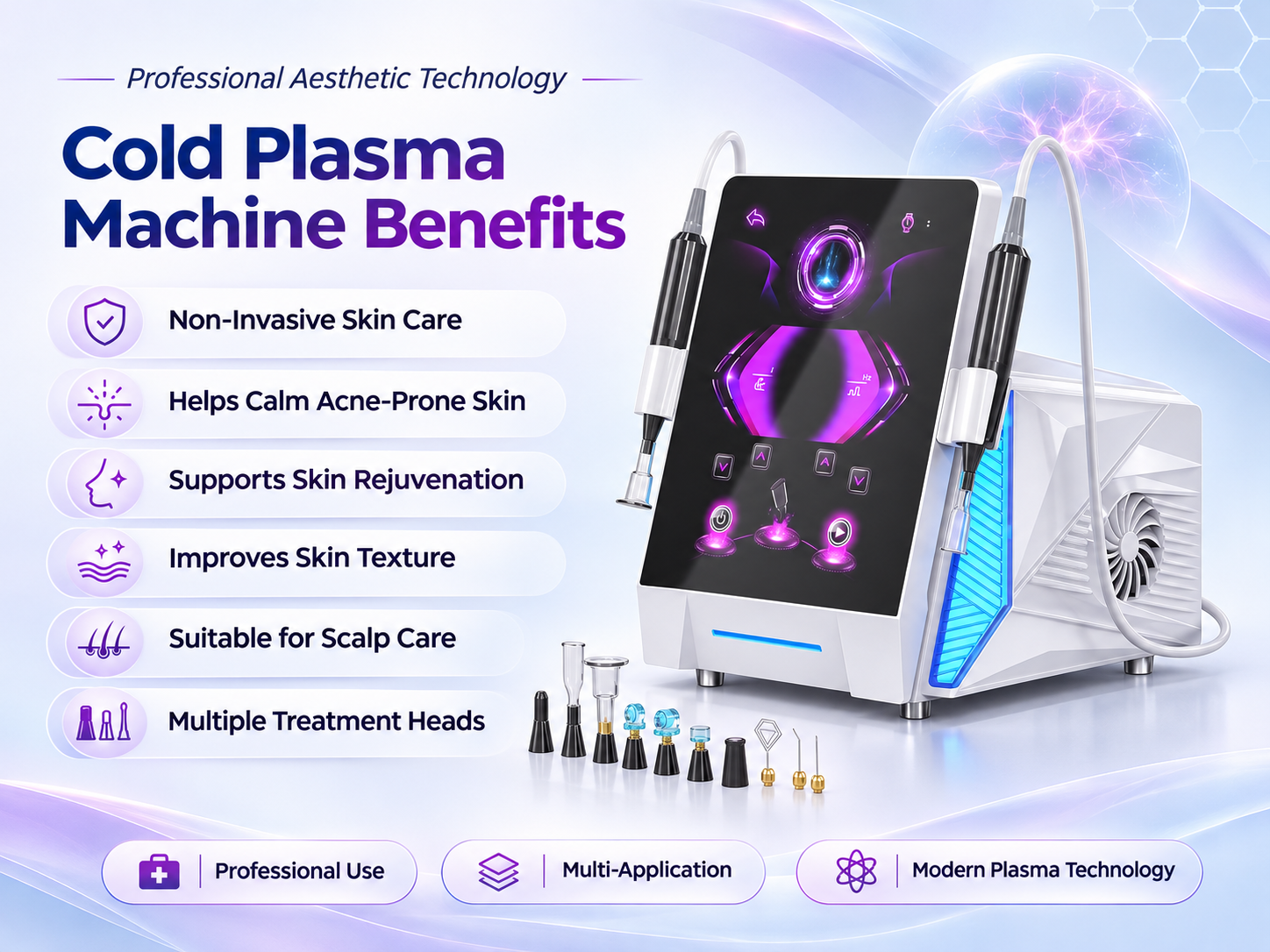
Explore the Emmalaser professional cold plasma machine for product information, electrode options and a factory-direct quotation.
Frequently Asked Questions
Is cold plasma the same as a high-frequency facial?
Not necessarily. Traditional high-frequency facial devices usually use gas-filled glass electrodes. Professional cold plasma systems are designed around particular non-thermal plasma sources and controlled operating conditions. Some high-frequency devices can also create plasma, so specifications matter more than labels.
Is cold plasma better than high-frequency for acne?
There is no universal answer. Clinical results depend on the exact device, indication and protocol. CAP research on microbial and dermatologic applications should not be generalized into an acne-treatment claim for an unverified cosmetic machine.
Does a cold plasma machine use high-frequency electricity?
Some cold plasma generators use high-frequency electrical excitation, but frequency alone does not establish the composition, temperature or biological effects of the generated plasma.
Does every cold plasma machine require an argon gas cylinder?
No. Designs include ambient-air and externally supplied gas systems. Check the operating requirements of the exact model rather than assuming all cold plasma machines use the same gas supply.
What should a clinic check before buying a cold plasma machine?
Confirm the machine's intended use, model-specific operating instructions, electrode options, contraindications, applicable compliance documentation, training, warranty and replacement accessories.
Final Verdict
For a conventional salon facial, a traditional high-frequency wand may be a simple and familiar option. For clinics evaluating a more configurable plasma platform, professional CAP equipment may offer different electrode designs and operating modes. Neither label guarantees better outcomes. Make the decision based on the precise device, credible performance evidence, professional training and the services your clinic is authorized to provide.
Explore Emmalaser Cold Plasma Technology
View model E20150311, ask for the latest specifications and request a professional quotation.
View Cold Plasma Machine info@emmalaser.comResearch & Further Reading
- Khalaf AT et al. (2024). Cold atmospheric plasma (CAP): a revolutionary approach in dermatology and skincare. Review of mechanisms and dermatologic research.
- Cold Atmospheric Plasma in Wound Healing: Molecular Mechanism of Action. Review; emphasizes the need for standardized parameters and longer-term evidence.
Educational content only. This guide does not provide a medical treatment protocol or imply that a cosmetic device is approved for medical indications.

